
What Is Timeline Planning? The Calm Way to See Your Week
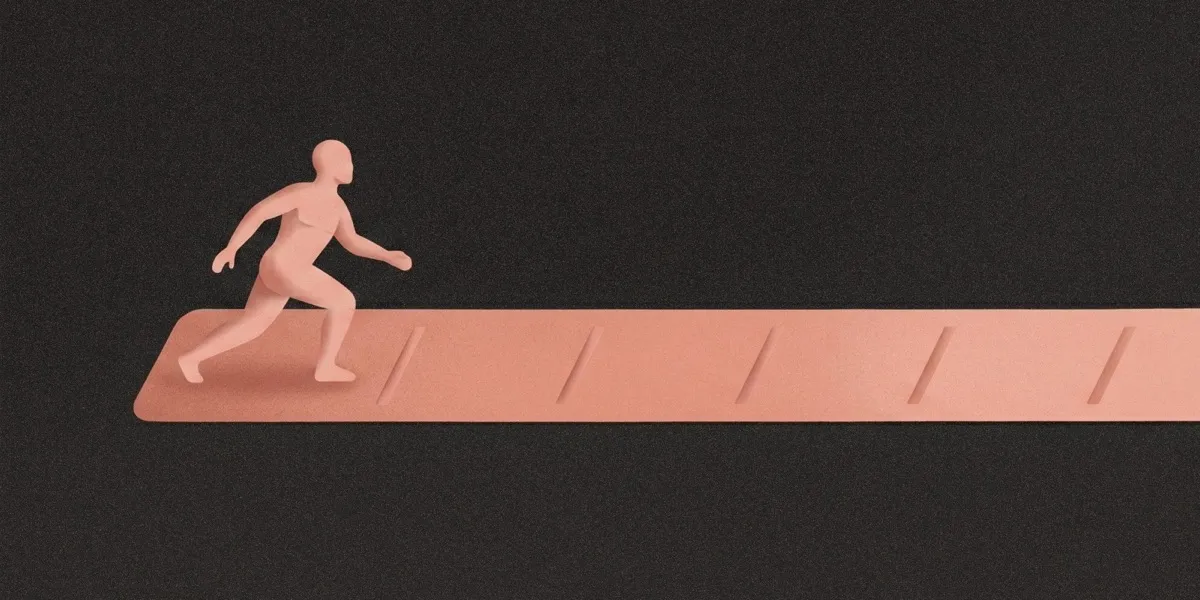
You open your planner on Monday and there it is again: a vertical stack of tasks, all stripped of when, all shouting equally, none of them aware that some belong to today and some belong to a Thursday you can’t quite picture yet. You work down the list. By Wednesday the list has grown faster than you’ve crossed things off, and the week feels less like a path you’re walking and more like a tide you’re treading water in.
Timeline planning is a way of planning your time as a continuous line rather than a flat list. Instead of collapsing everything into one undated pile, you lay your days out in order - today, tomorrow, the rest of the week, so you can see where each task actually lives and how today connects to where you’re headed. It is the difference between a heap of stones and a road.
That single shift from what to what and when - is what makes timeline planning feel different the moment you try it. A list answers one question: what is left to do. A timeline answers a better one: what does my week look like, and where am I in it right now.
Where timeline planning comes from
The idea is older than any app. Project managers have drawn work along a horizontal timeline for over a century - the Gantt chart, sketched out around 1910, was exactly this: tasks placed in time so a whole project could be seen at a glance instead of read as a list. Anyone who has ever drawn a rough week across a notebook page, with Monday on the left and Friday on the right, has done timeline planning by hand.
What’s new is bringing that same view down to the scale of a single person’s week. Most of us never inherited a tool for it. We were handed to-do lists and calendars and told to make them work, and we quietly accepted the gap between them — the list that knows what but not when, the calendar that knows when but not the loose, unscheduled work that fills most of a real day. Timeline planning lives in that gap. It treats your week the way a project manager treats a project: as something laid out in time, visible all at once.
Timeline planning vs the methods you already know
The fastest way to understand timeline planning is to set it beside the three approaches most people are already using. Each one solves part of the problem. Timeline planning is what you get when you keep the part that works and drop the part that doesn’t.
Versus a flat to-do list
A to-do list is a pile. Everything sits at the same level, undated, equally urgent-looking, with no sense of sequence. This is why a long list feels heavier than the work it represents - you carry the whole pile in your head at once, because nothing on it tells you what is for now and what is for later.
Timeline planning keeps the list’s one virtue - you write things down, you stop holding them in your head and adds the missing dimension: order in time. Tasks don’t vanish into a single column. They land on the day they belong to. A list says “here is everything.” A timeline says “here is today, and here is what’s waiting further down the road.” The mental weight drops because you only have to carry today.
Versus time blocking
Time blocking goes the other way - it adds too much structure. You assign every task a specific slot: emails 9:00 to 9:30, deep work 9:30 to 11:00, and so on down the hour. It is precise, and for some hours of some days it is genuinely useful. But most days don’t survive contact with a minute-by-minute schedule. One call runs long, one task is harder than it looked, and by mid-morning the whole grid has fallen out of sync with reality. The plan becomes a thing you’ve failed rather than a thing that helps you.
Timeline planning works at a calmer resolution. It cares about which day and roughly what order, not which fifteen-minute box. You see the shape of the week without committing to a schedule that will be wrong by lunch. Think of time blocking as a train timetable and timeline planning as knowing which towns you’re passing through, in what order - one breaks when a train is two minutes late, the other doesn’t.
Versus calendar-based planning
A calendar is excellent at one thing: events with a fixed time. The 2:00 meeting, the dentist, the flight. But most of your real work isn’t an event. It’s the draft, the follow-up, the thinking - work that has to happen this week but isn’t pinned to a clock. Drop that work into a calendar and you either invent fake appointments for it or leave it off entirely, where it falls back into the very list you were trying to escape.
Timeline planning holds both kinds of work in one view. The fixed events stay fixed, and the loose, unscheduled work sits on the day it needs to get done - present and visible, but not pretending to be a 10:15 appointment. You stop running two systems that don’t talk to each other. There is one line, and everything you’re carrying lives somewhere on it.
The pattern across all three is the same. A list has no when. Time blocking has too much when. A calendar only handles the rigid kind of when. Timeline planning sits in the middle - enough structure to see your week, not so much that the plan breaks the first time the day surprises you.
Who timeline planning is for
Timeline planning helps most when your work doesn’t fit neatly into appointments - when most of what you do is self-directed, spread across several threads, and stretched over days rather than packed into a single afternoon.
That describes a particular kind of person. The freelancer juggling three clients who each think they’re the only one. The creator with a video to film, a newsletter to write, and a launch two weeks out, all live at the same time. The solo founder holding product, marketing, and a dozen half-finished threads in their head. For people like this, the problem was never a shortage of effort. It was the lack of a single view that shows the whole week without burying today — a way to see how a comparison post you’re drafting now and a launch you’re planning for later both live on the same line. (If you’re weighing tools for exactly this, here’s how a timeline planner compares to an all-in-one workflow hub.)
It helps less if your days are already a wall of fixed meetings - a calendar handles that fine. Timeline planning earns its place when the work is yours to shape, and the hard part is seeing the shape clearly.
How to start with timeline planning
You don’t need a tool to try this. You need a page and a few minutes. Here is the shortest honest version.
Lay out the days, not just the tasks. Take this week and write the days in order - today at the top, the rest of the week below it. Even a rough vertical line down a notebook page works. The point is to give your week a shape before you fill it.
Place each task on the day it belongs to. Go through what’s on your mind and put each item on its day, not in one undated pile. Some land on today. Most don’t - and seeing that is the whole relief. The week stops being one heavy block and becomes a sequence you can walk.
Choose what today is actually for. A day holds less than we like to admit. Pick the one thing that matters most and a couple of smaller supports, and let the rest sit further down the line where you can see it without carrying it. The 1-3-5 rule for choosing what matters today is a simple way to do this - one big thing, three medium, five small.
Work from today, and let the rest wait its turn. You only act on today. The future days aren’t a backlog screaming at you; they’re a road you can see ahead, which is a different feeling entirely. Tomorrow you scroll down one day, and what was distant is now in front of you.
That’s the method in four moves. If you want the full version - how to handle the overflow, how to review the week without guilt, what to do when a day blows up - we wrote our step-by-step guide to planning your week on a timeline for exactly that.
The quiet shift underneath it
Timeline planning isn’t really a productivity trick. It’s a change in what you’re looking at. A list keeps you staring at the size of what’s left. A timeline lets you look at the path - both the part ahead and, on a Friday, the part you’ve already covered. Most of us lose momentum not because we run out of effort but because we only ever see the mountain, never the ground we’ve crossed. Seeing your week as a line quietly fixes that.
Paso is built around this single idea: see your week on one clear timeline, with each day a flexible page that holds your tasks and notes together. Lay out your days, place your work on the line, and start with the one that matters most today.
Frequently Asked Questions
What is timeline planning?
Timeline planning is a way of planning your time as a continuous line instead of a flat list. You lay your days out in order, today, tomorrow, the rest of the week, and place each task on the day it belongs to, so you can see where your work actually lives and how today connects to the week ahead. A to-do list answers “what is left to do.” A timeline answers “what does my week look like, and where am I in it.”
How is timeline planning different from time blocking?
Time blocking assigns every task a specific time slot, down to the hour. It’s precise but brittle: one call running long can throw the whole schedule out of sync. Timeline planning works at a calmer resolution: it cares about which day and roughly what order, not which fifteen-minute box. You see the shape of your week without committing to a minute-by-minute grid that breaks the first time the day surprises you.
What is a timeline planner?
A timeline planner is a tool, paper or digital, that lets you lay your days out as a continuous line and place tasks on the day they belong to, rather than collapsing everything into one undated list. It sits between a to-do list (which has no sense of when) and a calendar (which only handles fixed appointments), holding both your scheduled events and your loose, unscheduled work in one view.
Who is timeline planning for?
Timeline planning helps most when your work is self-directed and spread across several threads over days: freelancers juggling multiple clients, creators with overlapping projects, solo founders holding many things at once. It earns its place when most of your work isn’t a fixed appointment and the hard part is seeing the whole week clearly without burying today. If your days are already a wall of meetings, a plain calendar handles that fine.
How do I start timeline planning?
Start with a page and a few minutes. Write this week’s days in order, place each task on the day it belongs to, then choose the one thing that matters most today plus a couple of smaller supports. Work only from today and let the rest wait its turn down the line. That’s the whole method, no tool required to try it.