The skill no one teaches founders: being grateful for what you already did
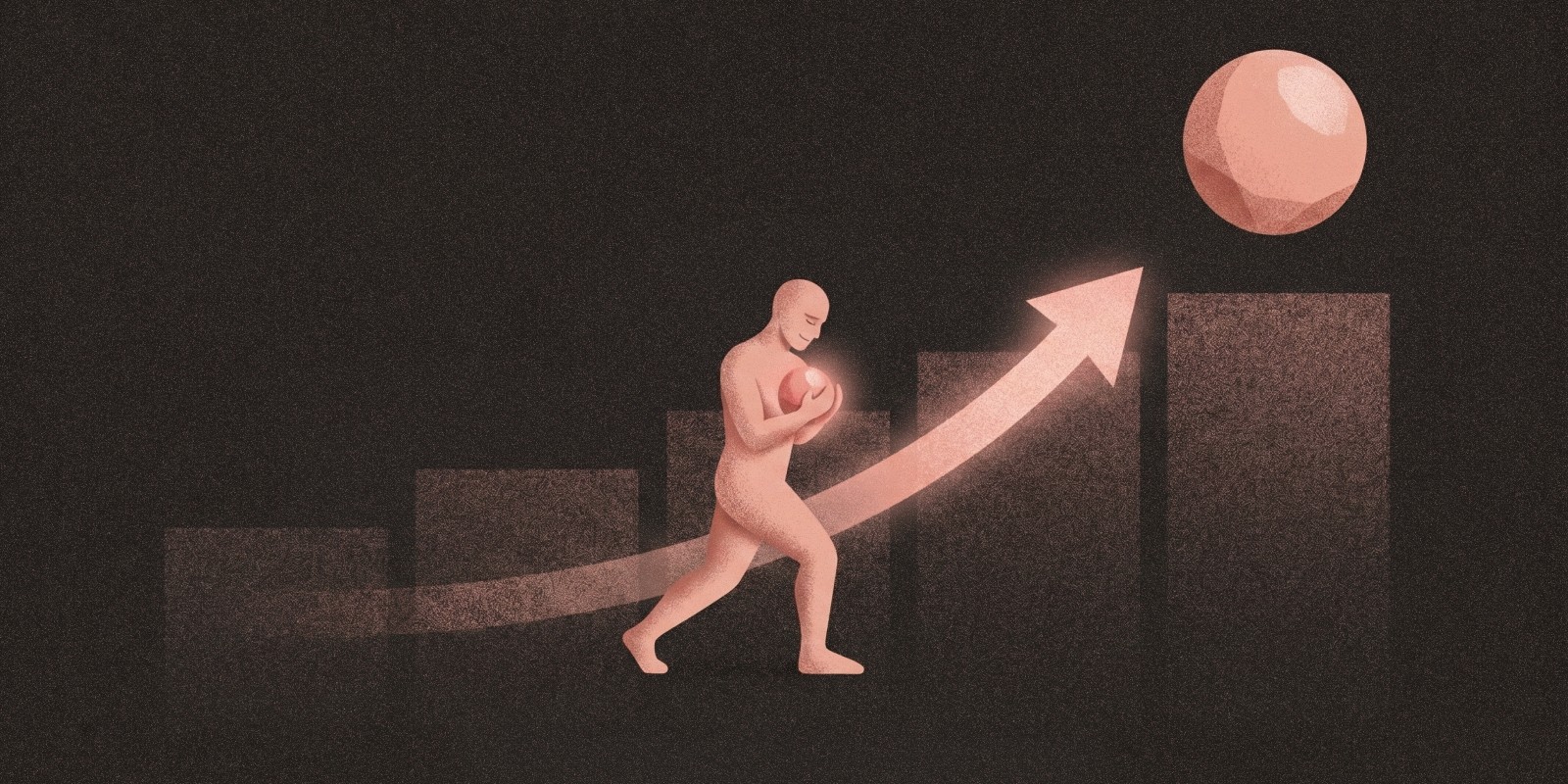
There is a particular kind of exhaustion that comes from building something no one has noticed yet.
You have been working for weeks, maybe months. You shipped a feature. You wrote the blog post. You sent the emails. You've sweated buckets at the gym. And the metrics have barely moved. No congratulations. No milestone. No external signal that says: you are doing well.
In that silence, a thought takes root. It sounds reasonable, even productive: "I have not done enough."
That thought is the most dangerous thing in your day. Not because it is always wrong, sometimes there is more to do. But because it blinds you to something important: you have already done a great deal, and you have not stopped to notice.
The trap of the forward gaze
Most productivity advice is oriented entirely toward the future. Set goals. Define milestones. Track what remains. Plan what is next. This forward orientation is useful, until it becomes the only direction you look.
When you only look at what is ahead, every day starts with a deficit. You wake up and see the gap between where you are and where you want to be. The mountain looks enormous. The work feels insufficient. Even a productive day ends with the nagging feeling that it was not productive enough, because the distance to the summit barely changed.
This is especially true for founders, creators, and anyone building something from zero. In a corporate job, you get performance reviews, promotions, colleagues who notice your work. When you are building alone or with a small team, that feedback loop does not exist. The work happens in silence, and silence is easily misread as failure.
Tony Robbins, in Awaken the Giant Within, makes an argument that stuck with me. He treats gratitude not as a soft, feel-good exercise but as a deliberate tool for changing your emotional state. His point is direct: the quality of your life is determined by the emotions you experience most frequently. If you spend most of your time feeling like you are behind (like nothing is enough) that emotional state becomes the lens through which you see everything. Including your own work.
Gratitude, in his framework, is not about positive thinking. It is about accurate thinking. It is the act of looking at what you have actually done and allowing yourself to register it before rushing to what comes next.
Why this matters for momentum
There is a practical reason to care about this, beyond emotional well-being.
Researchers Robert Emmons and Michael McCullough ran a series of experiments in the early 2000s where they asked people to write down things they were grateful for each week. The result was not dramatic, but it was remarkably consistent: participants who kept gratitude lists reported higher motivation, more optimism, and greater progress toward personal goals than those who did not. The effect held across multiple studies and persisted over time.
The mechanism is not mysterious. When you acknowledge what you have done, you create evidence of your own capability. That evidence fuels what psychologist Albert Bandura called self-efficacy, the belief that you can produce desired outcomes through your actions. Self-efficacy is not confidence in the abstract. It is confidence rooted in a specific track record: I have done things before, and they mattered.
Without that evidence, motivation erodes. Not because the work stopped being worthwhile, but because you stopped registering the proof that your effort is accumulating into something real.
The silent builder
There is a particular version of this problem that almost no one talks about.
If you are early in building something (a product, a business, a creative body of work) you are in a phase where the ratio of effort to visible result is at its worst. You are laying foundations. Building infrastructure. Creating things that no one will see for months or years. The compounding curve is flat, and you are deep in what James Clear calls the Valley of Disappointment.
In that valley, no one is going to tell you that you are doing well. Your metrics are not impressive. Your user count is not growing fast. Your audience is small. The external validation that other people rely on to feel momentum simply does not exist for you yet.
This is where gratitude becomes something more than a wellness practice. It becomes a survival skill.
Because when the external feedback loop is missing, you have to build an internal one. You have to become the person who notices your own progress, not to inflate your ego, but to give your brain the evidence it needs to keep going.
Look at what you built this month. Not what you planned. What you actually did. The feature you shipped. The three blog posts you wrote. The email you sent that led to a conversation. The bug you fixed that no one will ever know about. Each of those is a stone on the path. And the path is longer than you think.
The daily practice
This does not require a journaling habit or a gratitude ritual with candles and a special notebook. It can be far simpler than that.
At the end of your day (or at the beginning of tomorrow) look at what you did. Not what you did not do. Not what fell through the cracks. Just what you actually spent your time on.
One question is enough: "What did I do today that I can be grateful for?"
The answer might be small. You showed up. You wrote 200 words. You had the difficult conversation you had been avoiding. You planned tomorrow. That is enough. Not because the bar is low, but because recognizing the step is what gives you the energy for the next one.
Robbins argues that most people live in a state of constant lack, always focused on what is missing, what went wrong, what is not yet achieved. Shifting to gratitude is not about ignoring problems. It is about correcting an imbalance. You are probably already very good at noticing what is not done. The skill you are missing is noticing what is.
Seeing the path behind you
There is a reason why looking backward works.
We often lose our drive because we only look at the mountain. We see the distance remaining and feel paralyzed by it. What we forget to do is turn around and look at the path we have already walked.
That backward glance is not nostalgia. It is not a distraction from the work ahead. It is a recalibration. When you see three months of daily pages filled with decisions, notes, and completed tasks, something shifts. The work is no longer abstract. It is visible. Tangible. Real.
This is also why the format of your planner matters more than it might seem. A planner that shows only today (a fresh page with no context) gives you no access to your own history. That is the core idea behind timeline planning - past and present on the same scrollable surface. You start each day from zero, emotionally. A planner that shows yesterday alongside today does something different. It says: you were here yesterday. You did things. And today is a continuation, not a restart.
That continuity is the visual form of gratitude. You do not have to write a list of things you are grateful for. You can simply scroll back and see them.
The difference between pushing and being pulled
There are two ways to sustain effort over long periods. You can push yourself forward with discipline, willpower, and a focus on what remains. Or you can be pulled forward by evidence, by seeing that the work is accumulating, that the days are adding up, that the path is forming beneath your feet.
Pushing works for a while. It is what gets you through the first sprint. But pushing alone is exhausting, and exhaustion is the precursor to quitting.
Being pulled, by visible progress, by evidence of your own consistency, by the quiet recognition that you have been doing this longer than you realize, is sustainable in a way that pushing is not. It does not require you to summon motivation from nowhere. It asks only that you look at what is already there.
Gratitude is not the soft skill everyone thinks it is. For builders, creators, and founders working in silence, it is the thing that keeps the engine running when no one else is watching.
Summary
Before anyone else appreciates your work, you have to. Gratitude for your own progress is not a wellness luxury, it is the feedback loop that keeps momentum alive when external validation does not exist yet. The practice is simple: look at what you actually did, not just what remains. And sometimes the easiest way to practice that backward glance is to have a planner that makes it natural, one where yesterday is always visible beside today. That is why we built Paso. Not as a to-do list, but as a place where your past work stays within sight, quietly reminding you how far you have come.
Frequently Asked Questions
How does gratitude improve productivity?
Gratitude shifts your attention from what is missing to what has been accomplished. In a well-known series of experiments, Emmons and McCullough found that people who regularly wrote down what they were grateful for reported higher motivation and more progress toward goals. The mechanism is self-efficacy: when you recognize your own track record of effort, you build the belief that further effort will be worthwhile. That belief is what sustains action over time.
Why do founders and creators struggle with self-appreciation?
Because they operate in environments with delayed and sparse feedback. In a traditional job, performance reviews, promotions, and peer recognition provide external evidence of progress. Founders and solo creators often work for months without any of that. The absence of external validation makes it easy to default to a narrative of insufficiency ("I have not done enough") even when the work has been substantial.
What is the simplest gratitude practice for busy people?
One question at the end of the day: "What did I do today that I can be grateful for?" The answer does not need to be impressive. It needs to be honest. Even small acknowledgments, showing up, making progress on a difficult task, having a conversation you were avoiding, count. The point is to interrupt the default pattern of only noticing what was not done.
How does looking at past progress help motivation?
It provides evidence of capability. Albert Bandura's work on self-efficacy shows that the strongest predictor of future effort is past success, not in the abstract, but observed and recognized. When you look back at a week or month of completed work, your brain registers a pattern of consistency. That pattern is more motivating than any goal or deadline, because it is proof rather than promise.
Can a planner help with practicing gratitude?
A planner that shows your recent past alongside your present day creates a natural opportunity for the backward glance. Instead of starting each day from a blank page, you see what you did yesterday and the days before. That continuity (visible evidence of your own consistency) functions as a built-in form of progress recognition. It does not replace deliberate gratitude practice, but it makes the evidence of your effort hard to miss.