Your brain doesn't need you to finish. It just needs a plan.
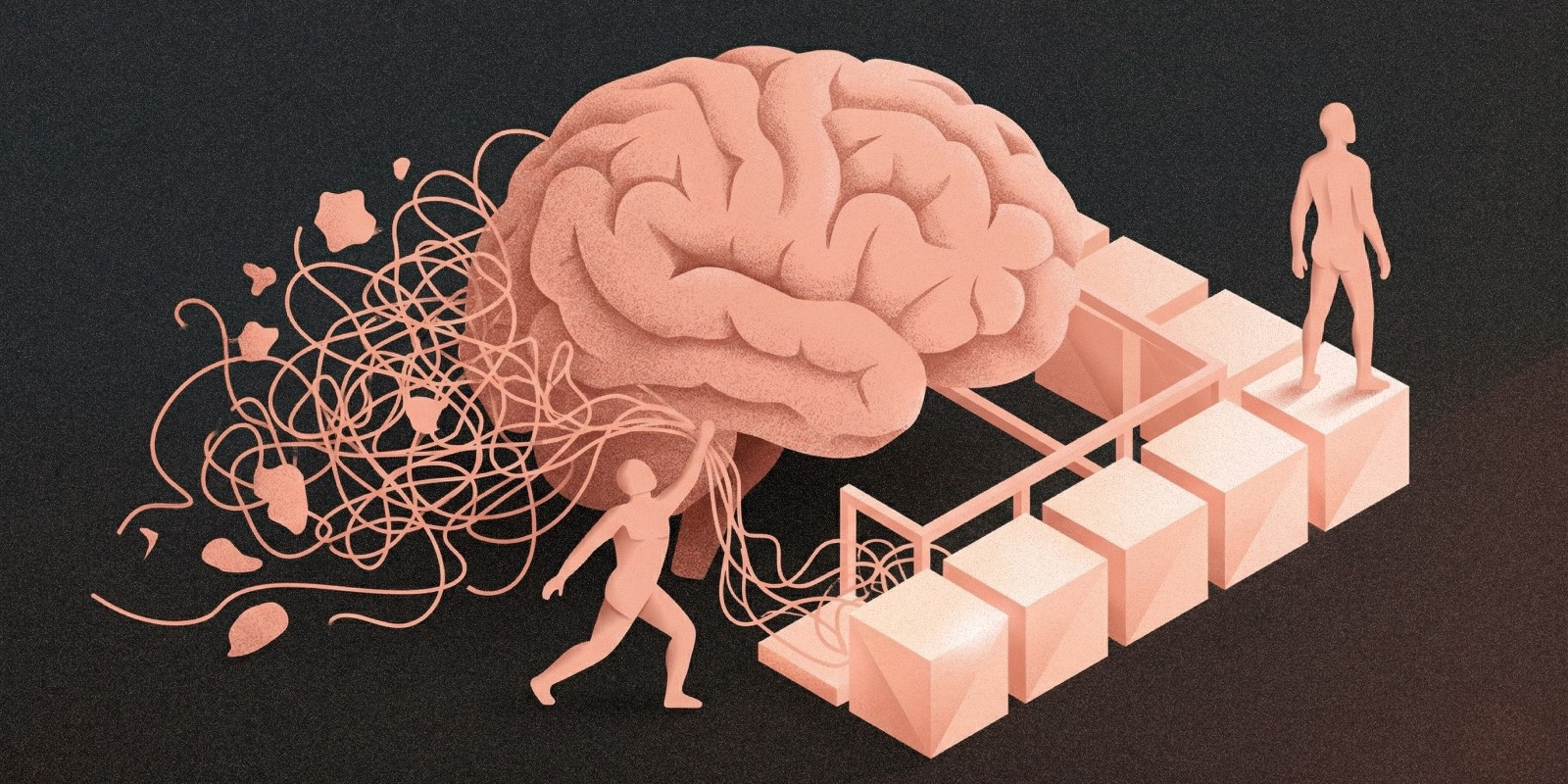
You've been lying awake thinking about an email you haven't sent. Or a conversation you keep postponing. Not because you were anxious about the outcome, but because it's open. Unresolved. Sitting in mental RAM, running quietly in the background, consuming resources you never consciously allocated to it.
This is not a discipline problem. It is not a motivation problem. It is a cognitive architecture problem and understanding it changes how you think about the benefits of daily planning entirely.
The waiter who remembered everything
In the 1920s, a young Lithuanian psychologist named Bluma Zeigarnik made an observation in a Viennese restaurant. The waiters there could hold remarkably complex orders in memory - multiple tables, unusual requests, specific modifications - without writing anything down. But as soon as an order was delivered, the waiter forgot it almost immediately.
Zeigarnik noticed something telling in this. The mind does not treat finished and unfinished tasks equally. Completed tasks are filed and released. Unfinished ones are kept active - on call, ready to be retrieved at any moment. The brain maintains a kind of persistent alert for open loops, a low-level monitoring process that refuses to stand down until the task is done.
This became known as the Zeigarnik effect: the tendency for incomplete tasks to occupy mental attention more than completed ones.
It explains the email. It explains the conversation. It explains why you can finish a long project and feel immediate mental quiet, while a single unanswered message can follow you through an entire evening.
A plan is not a completion - but it works like one
Most people assume the solution is to do more. To clear the list. To finish before they rest.
The truth is more useful than that.
In 2011, researchers E.J. Masicampo and Roy Baumeister published a study in the Journal of Personality and Social Psychology titled "Consider It Done! Plan Making Can Eliminate the Cognitive Effects of Unfulfilled Goals." The findings were specific and, once understood, difficult to unsee.
Participants who had unfinished goals showed the classic Zeigarnik effect - those goals kept intruding on their thinking, pulling attention away from whatever they were doing. But when participants were asked to make a concrete plan for when and how they would complete the goal, the intrusive thoughts stopped. Not because the task was finished. Because the brain received a credible placeholder.
The plan itself - not the completion - was enough to satisfy the monitoring process.
Performance on unrelated tasks improved. Mental bandwidth was restored. The open loop was not closed, but it was anchored. And the brain, apparently, treats an anchored intention nearly the same as a resolved one.
What your brain is actually asking for
This is the reframe that matters: your brain does not need closure. It needs a promise with enough specificity to trust.
A vague intention "I'll deal with that email at some point", does not satisfy the monitoring process. The brain has no reason to trust that claim. It keeps the alert active. It keeps the tab open.
A specific plan "I will respond to that email tomorrow at 9am, before anything else", gives the brain what it actually needs. A named time. A named action. A commitment it can file rather than track.
This is not self-deception. It is how the mind allocates attention. The difference between a thought that follows you home and one that stays at the desk is usually not the thought's importance. It is whether there is a credible plan behind it.
A plan is a promise you make to your future self that satisfies your present self's need for resolution.
The cognitive cost of leaving tabs open
Consider what happens when you do not plan.
Each unfinished item - not just the urgent ones, but all of them - occupies a small slice of working attention. A meeting you need to schedule. A decision you have been putting off. A task that exists somewhere on a mental list you stopped trusting weeks ago. None of these feel particularly heavy on their own. Together, they accumulate.
The metaphor is accurate in a way that becomes uncomfortable once you notice it. Open browser tabs do not appear to slow a computer until there are enough of them. Then the whole machine runs warmer, slower, less responsively. The problem is not any single tab. It is the aggregate load of keeping them all resident.
The same is true of unplanned intentions. Each one is a small claim on your cognitive resources - not just when you are actively thinking about it, but whenever your mind performs its background sweep and finds it still open. This is why planning reduces stress not as a psychological trick, but as a structural reduction in cognitive load.
No plan is not relaxing. It is expensive.
Why daily planning reduces stress and how to use this
The practical application is not complicated, but it requires a deliberate habit.
At the end of each day, before you step away from work, sit with whatever remains open. Not to finish it. Not to feel bad about it. Simply to assign it a place.
This is a different act than making a to-do list. A to-do list is a collection of open loops. A plan is a collection of anchored intentions - tasks that have been assigned a time, a sequence, a context in which they will be addressed. The Masicampo and Baumeister finding suggests that this distinction is not cosmetic. The brain responds differently to a list and a plan, because the monitoring process is looking for a specific kind of resolution: not "it exists" but "it will happen, here, at this time."
The end-of-day review is the act of closing tabs. Not deleting them. Saving and closing them, so they do not run overnight.
The morning plan is the act of opening only the tabs you intend to use today. Not every tab from every project. Not the full backlog. The specific, finite set of intentions that belong to this day.
These two acts, closing and opening deliberately are what separate a day that feels bounded from one that feels like it spills in every direction.
There is no mysticism in it. There is no perfect system required. You need only the habit of pausing, naming what is open, and deciding where each item belongs. When, specifically. With what priority.
A few minutes at the end of the day does more for your mental rest than an hour of trying to finish one more thing. Because finishing one more thing rarely closes the loop you actually needed to close. But a credible plan for tomorrow's open items almost always does.
The discipline you are actually building
When people talk about the benefits of daily planning, they often describe it in terms of output. More tasks completed. Better time use. Greater efficiency.
These things may be true. But they are secondary.
The primary benefit is quieter. It is the gradual disappearance of that low background noise - the hum of unanchored intentions running alongside everything else you do. When you plan consistently, you are not building a system for doing more. You are building a mind that trusts itself to remember what matters, because it has a reliable place to store what matters.
That trust compounds. After a few weeks of ending the day with everything anchored, your mind begins to release things earlier. The email does not follow you home. The decision sits at the desk where you left it. You sleep with less weight on the ceiling above you.
This is what Zeigarnik was observing in that restaurant, though the language for it came later. The mind is not trying to sabotage your rest. It is doing exactly what it is designed to do: keeping open things open until it has somewhere better to put them.
Give it somewhere better to put them.
At Paso, we designed the timeline around this exact principle - a place to close your open loops before the day ends, so your mind can actually rest. If you want to try it: open Paso and spend five minutes before you finish today anchoring what is still open. That is the whole practice. Start there.