Morning routine for people who hate morning routines
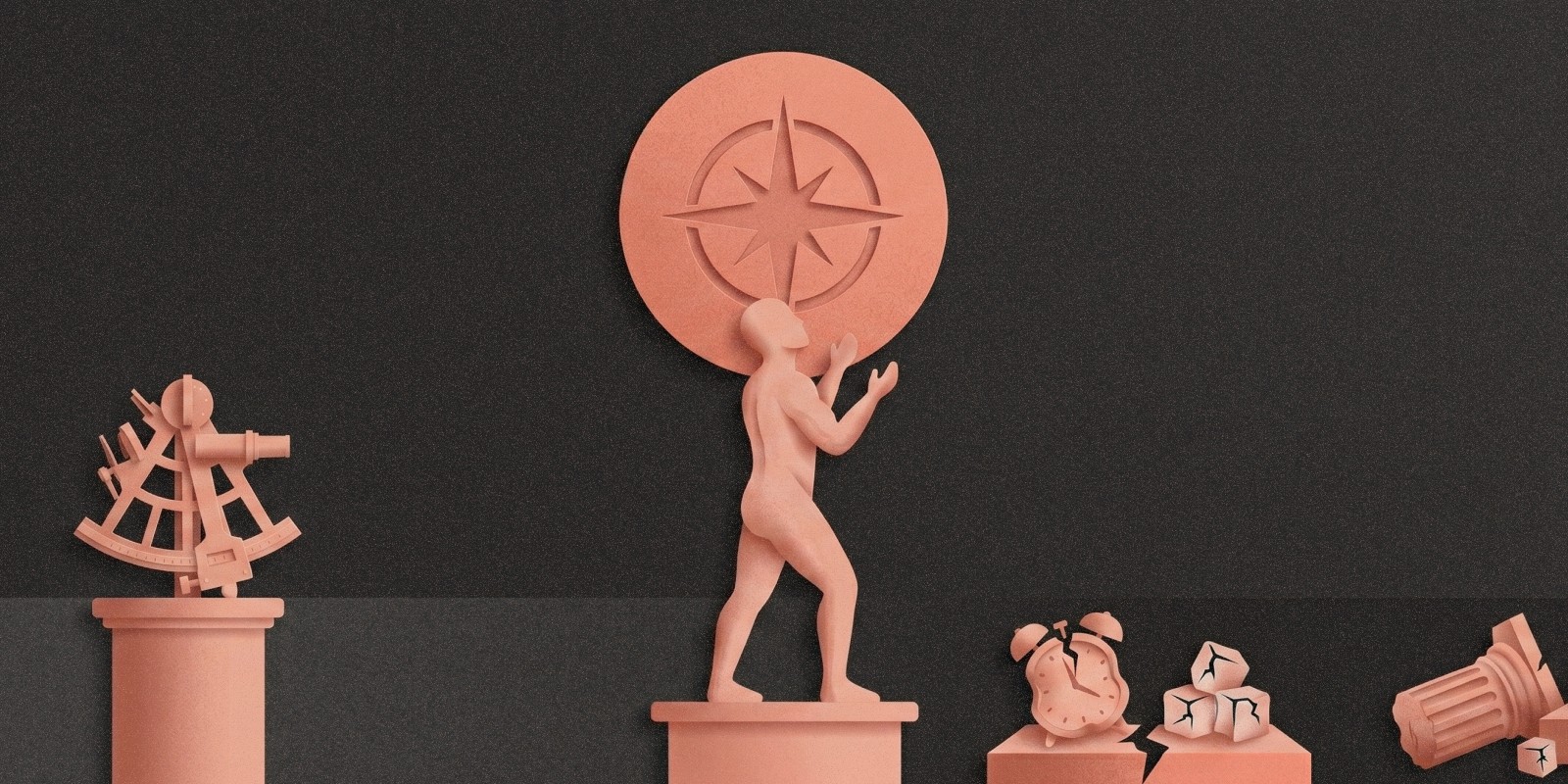
Somewhere in the last decade, morning routines became a competitive sport. Wake at 5 AM. Meditate for twenty minutes. Cold plunge. Journal three pages. Review your vision board. Drink a glass of water with lemon and gratitude. All before the sun comes up.
If that sounds exhausting, you are not alone. And if you have tried some version of it and quit by Thursday, welcome. Most people do.
The problem is not that you lack discipline. The problem is that the morning routine industrial complex, that relentless stream of books, podcasts, and LinkedIn posts insisting that success requires a ninety-minute pre-dawn ritual, has conflated preparation with performance. It has confused the wrapping for the gift.
Here is the gift, unwrapped: the only morning that matters is one where you decide what today is for.
The one thing that actually helps
There is real research behind this, and it is more modest than the morning routine evangelists would have you believe.
A study on daily planning tracked nearly 200 employees across two weeks to see whether planning actually improves performance. The answer was yes, but not because of any elaborate ritual. The researchers found that two types of morning planning made a difference: time management planning, where people prioritized tasks and decided when to do them, and contingent planning, where people anticipated possible interruptions. Both types improved daily performance by increasing work engagement. The planning itself was the lever, not the candles and cold water surrounding it.
What stands out is how little was required. The study did not ask participants to overhaul their mornings. It measured whether the simple act of thinking ahead about the day (deciding what matters and when to do it) made the day go better. It did.
This aligns with decades of research on implementation intentions, the idea that linking an action to a specific time or context dramatically increases the likelihood of follow-through. When you tell yourself "I will work on the proposal at 9 AM" instead of just "I should work on the proposal," something shifts. A large meta-analysis covering 94 studies found a medium-to-large effect on goal attainment. You do not need a ritual. You need a decision, placed in time.
What you can skip
Let me be clear about what the research does not say. It does not say you need to wake up early. It does not say you need to meditate. It does not say you need to sit in ice water, write in a leather-bound journal, or practice affirmations in front of a mirror.
Those things work for some people. If you genuinely enjoy a long, structured morning and it sets you up well, keep doing it. This is not an argument against morning rituals in general. It is an argument against the assumption that everyone needs one.
The vast majority of advice about morning routines takes the habits of a narrow group, often entrepreneurs, executives, and authors who have unusual control over their schedules, and presents them as universal requirements. They are not. A parent with a toddler, a nurse working rotating shifts, a student with 8 AM lectures, these people do not have ninety free minutes at dawn. Telling them they need a complex morning routine to be productive is not helpful. It is alienating.
What everyone does have is a few minutes. And a few minutes is enough.
The 3-minute morning
Here is the entire method. It does not have a branded name. It does not require a workbook.
Minute one: Have your drink.
Coffee, tea, water, whatever you already do. You are not adding a new habit. You are attaching a tiny act of reflection to one you already have.
Minute two: Ask one question.
"What moves me forward today?"
Not "what are all the things I need to do." Not "how do I optimize my morning." Just: what is the one thing that, if I did it today, would make the day feel like it counted?
This question does two things. It forces you to prioritize, which, as the research on daily planning showed, is the core mechanism behind effective morning planning. And it separates what matters from what is merely loud. Email is loud. Slack is loud. The one project that has been sitting half-finished for two weeks is quiet, but it is probably more important.
Minute three: Write it down.
On paper, on your phone, on a napkin. The medium does not matter. What matters is that the answer leaves your head and exists somewhere you will see it again.
That is it. Three minutes. No cold plunge required.
Why writing it down matters
This is the step people skip, and it is the one that makes the difference.
There is a well-documented phenomenon in psychology called the Zeigarnik effect, named after psychologist Bluma Zeigarnik, who observed in the 1920s that people remember uncompleted tasks better than completed ones. The unfinished sits in your working memory, taking up space, creating a low hum of anxiety.
Writing your intention down does something useful with that effect. A well-known study on unfulfilled goals found that making a specific plan for an unfinished task (not completing the task, just planning for it) was enough to reduce the cognitive burden. The act of writing "I will finish the proposal draft this afternoon" frees your mind from the loop of reminding itself about the proposal.
When you write down your answer to "what moves me forward today," you are not just creating a reminder. You are telling your brain it can stop holding onto that open loop. It is handled. There is a plan.
What about planning the night before?
Some people prefer to plan their next day the evening before. This is a perfectly good approach, and for certain people it works better, especially if your mornings are chaotic or if you find that unresolved plans keep you awake at night.
The research on unfulfilled goals supports this too. Writing down tomorrow's plan before bed can quiet the mental chatter that comes from open tasks, making it easier to sleep.
But here is the honest answer: the best time to plan is the time you will actually do it. If you are the kind of person who sits down after dinner and thinks clearly about tomorrow, plan then. If you are the kind of person who barely remembers the evening and wakes up slowly with a cup of coffee, plan in the morning. The research does not show a meaningful advantage for one over the other. Consistency matters more than timing.
The morning routine you already have
Here is something the morning routine content rarely acknowledges: you already have a morning routine. Everyone does. It just might not look like the ones on YouTube.
You wake up. You check your phone or you do not. You make coffee or tea. You get dressed. You start your day. That is a routine. It happens more or less the same way most mornings, because human beings are creatures of pattern whether they intend to be or not.
The 3-minute method does not ask you to build a new routine. It asks you to insert one question into the routine you already have. Somewhere between the first sip and the start of work, you pause for a moment and ask: what is today for?
That is the whole intervention. It is small enough to survive the chaos of real mornings, the toddler who needs breakfast, the alarm that did not go off, the dog that wants out. It does not need silence or solitude or a special corner of your home. It needs three minutes and a willingness to choose.
For people who are not morning people
If the phrase "morning person" makes you flinch, this section is for you.
Chronotype research (studies on the biological differences between early risers and late sleepers) consistently shows that roughly 20 to 25 percent of the population are genuine evening types. This is not a preference. It is a biological trait, influenced by genetics, that affects when your body and brain perform best.
If you are an evening type, the traditional "wake up early and seize the day" advice is working against your biology. But the 3-minute method does not care about your chronotype. It does not require you to wake up earlier. It requires you to think for three minutes at some point before your day is underway. If that happens at 6 AM, fine. If it happens at 10 AM, also fine. The question "what moves me forward today" works at any hour.
The point was never about mornings specifically. It was about starting your day with intention instead of reaction. When that day starts is up to you.
Summary
You do not need a ninety-minute morning ritual to have a productive day. You need three minutes and one honest question: what moves me forward today? Write the answer down. Let that single decision shape how you spend your hours. That is the whole simple morning routine, and if you want somewhere to put that one answer where it stays visible next to your timeline, Paso is an app built for exactly that kind of three-minute clarity.
Frequently Asked Questions
Do I need a complicated morning routine to be productive?
No. Research on daily planning shows that the key mechanism behind productive days is prioritization, deciding what matters and when to do it. That can happen in three minutes. Elaborate morning rituals may work for some people, but there is no evidence that complexity itself adds value. Simple, consistent morning planning outperforms ambitious routines that you abandon by the second week.
What is the simplest effective morning routine?
The simplest version that the research supports is this: ask yourself what one thing would make today worthwhile, then write it down. That act of choosing and externalizing your priority takes about three minutes. It leverages the same psychological mechanisms (implementation intentions and reduced cognitive load) that more complex systems use, without the overhead that makes those systems hard to maintain.
Should I plan my day in the morning or the night before?
Either works. Morning planning gives you the freshest picture of the day ahead. Planning the night before can quiet the mental chatter from unfinished tasks and help you sleep better. Research on unfulfilled goals found that simply making a plan for an incomplete task reduces its cognitive burden, regardless of when you make that plan. The best time is whichever time you will consistently follow through on.
How long should a morning routine take?
As long as it needs to and no longer. For the morning planning component specifically, three to ten minutes is a well-supported range. If your morning routine takes sixty or ninety minutes and you enjoy it, that is fine, but the planning portion does not require that kind of time investment. The rest is personal preference, not a productivity requirement.
What if I am not a morning person?
Then do not force yourself into a morning person's routine. Chronotype research shows that roughly a fifth to a quarter of the population is biologically wired to peak later in the day. The important thing is not when you plan, but that you plan. Ask yourself "what moves me forward today" whenever your day functionally begins, whether that is 6 AM or 11 AM. Intentional planning works at any hour.